
Tag: Decision velocity
-
Decision Velocity Is the Missing Operating System
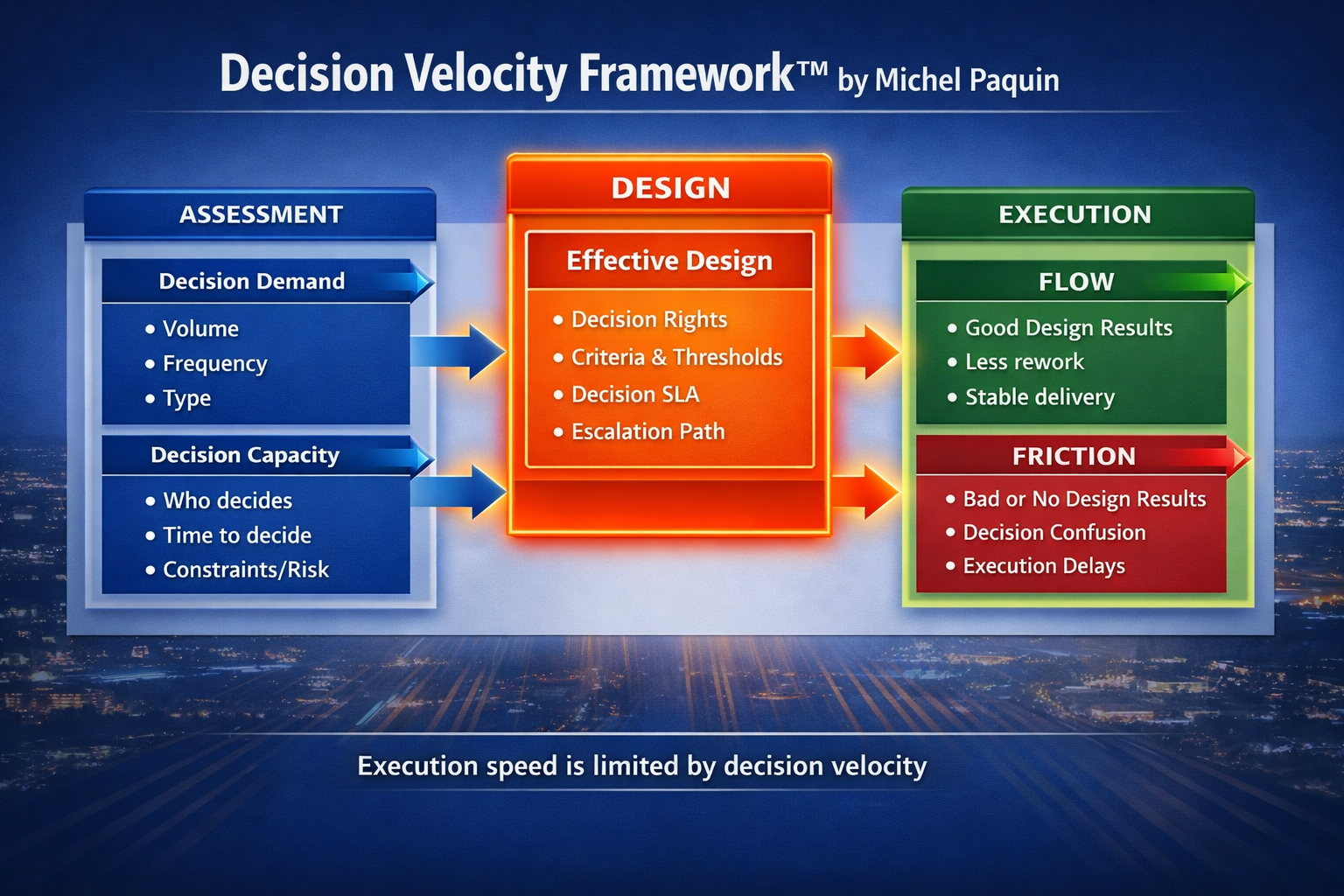
Execution speed is limited by decision velocity. In most transformations, agencies can execute faster than clients can decide. The result: delays, rework, and rising costs. The Decision Velocity Framework shows how to align decision demand, capacity, and design to restore flow and stabilize delivery. Read More
Written by
-
Ambiguity Tolerance Is a Leadership Skill
Leaders who need full certainty before acting do not create better governance. They create delay, escalation, and dependency. Ambiguity tolerance is the leadership skill that allows teams to move with incomplete information, using guardrails instead of paralysis. This article explains why some leaders freeze without certainty, how that behavior slows transformation, and what practical decision… Read More
Written by

-
The Story Your Team Is Protecting in This Decision
Most decision debates are not really about data. They are about the story people attach to the decision. A platform change can feel like an admission that a past choice was wrong. An escalation can feel like a loss of control. These hidden narratives shape how people interpret analysis, defend positions, and delay decisions. In… Read More
Written by

-
Emotions as Signal, Not Noise
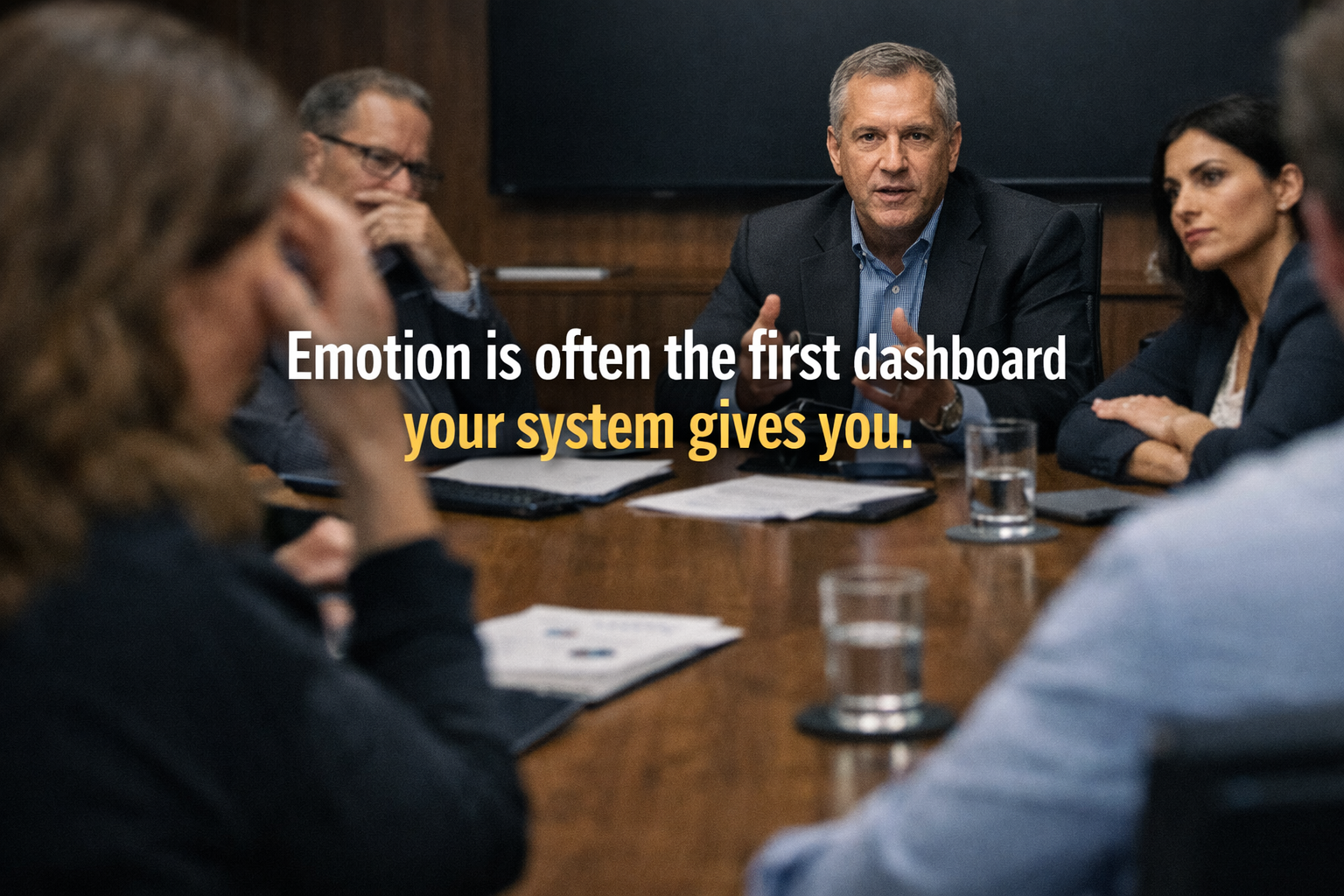
Leaders often treat frustration, defensiveness, and avoidance as noise to calm down or coach away. That is a mistake. In transformation work, repeated emotional patterns are often operational signals. Frustration usually points to blocked flow, rework, or impossible trade-offs. Defensiveness often reveals exposed accountability, hidden vetoes, or unsafe truth-telling. Avoidance usually shows up where ownership… Read More
Written by
-
“We Should Have Known Before”: The Fear Behind Late Decision Escalations
Late escalations rarely happen because people didn’t know earlier. More often, teams hesitate to escalate because escalation feels risky: it can signal failure, loss of control, or political exposure. So issues stay too low in the organization longer than they should. By the time they reach leadership, someone inevitably says, “We should have known before.”… Read More
Written by

-
Psychological permission: the missing layer of governance
Most teams don’t wait for approval because they’re unsure. They wait because the social cost of being wrong is higher than the operational cost of being slow. Leaders say “you’re empowered.” Then they reverse decisions, punish surprises, or keep the real criteria in their heads. So teams learn a rational habit: escalate, pre-brief, and seek… Read More
Written by