
Tag: transformation governance
-
Again the Same Decision – The Elevator Button Problem
Someone presses the elevator button even though it is already lit. Then someone else does the same. Transformation teams do this too. They reopen decisions because the system never made the decision feel final. The problem is not impatience. It is missing closure. Read More
Written by

-
Different Work Needs a Different Transformation Decision Lane
A grocery line works beautifully when every item follows the usual flow. But add one exception, and the whole system slows down. Transformation has the same problem: good management flow can become the wrong lane when the work is full of exceptions, dependencies, and decisions that need a different rhythm. Read More
Written by

-
Fear Disguised as Prudence
A driver hesitates too long merging into traffic and suddenly creates more friction, not less. Organizations do the same thing in transformation. What sounds like prudence is often fear, weak decision rights, and an invisible cost of delay wearing a respectable suit. Read More
Written by

-
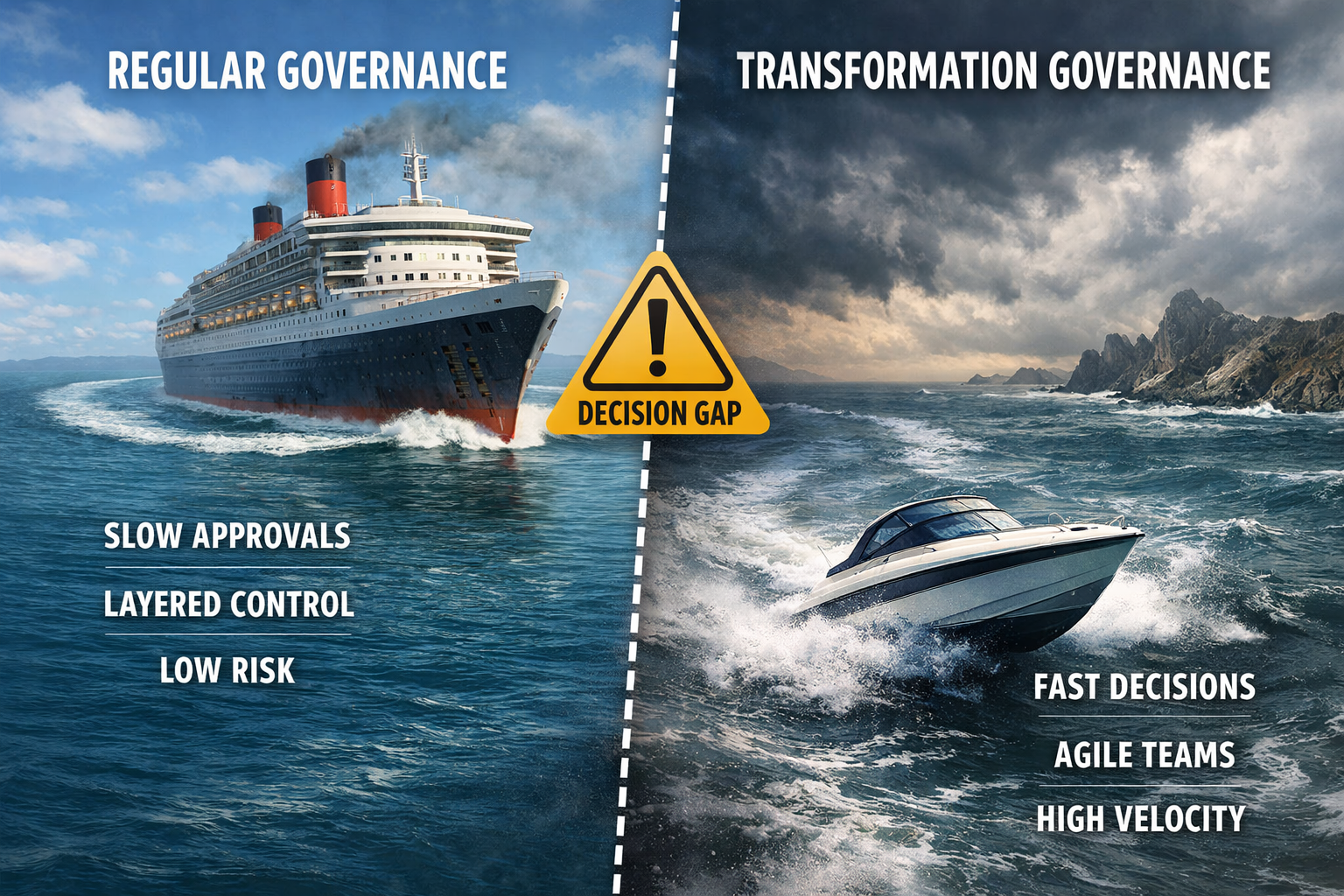
The Ocean Liner Problem in Transformation Governance
Regular business governance protects the company for good reasons. It reduces risk, protects margin, and keeps operations stable. But transformation decisions do not behave like normal operational decisions. They are more cross-functional, more time-sensitive, and more likely to create rework when delayed. This is the ocean liner problem: the governance model that is right for… Read More
Written by
-
The Story Your Team Is Protecting in This Decision
Most decision debates are not really about data. They are about the story people attach to the decision. A platform change can feel like an admission that a past choice was wrong. An escalation can feel like a loss of control. These hidden narratives shape how people interpret analysis, defend positions, and delay decisions. In… Read More
Written by

-
Psychological permission: the missing layer of governance
Most teams don’t wait for approval because they’re unsure. They wait because the social cost of being wrong is higher than the operational cost of being slow. Leaders say “you’re empowered.” Then they reverse decisions, punish surprises, or keep the real criteria in their heads. So teams learn a rational habit: escalate, pre-brief, and seek… Read More
Written by