Tag: Operating model
-
Again the Same Decision – The Elevator Button Problem
Someone presses the elevator button even though it is already lit. Then someone else does the same. Transformation teams do this too. They reopen decisions because the system never made the decision feel final. The problem is not impatience. It is missing closure. Read More
Written by

-
Different Work Needs a Different Transformation Decision Lane
A grocery line works beautifully when every item follows the usual flow. But add one exception, and the whole system slows down. Transformation has the same problem: good management flow can become the wrong lane when the work is full of exceptions, dependencies, and decisions that need a different rhythm. Read More
Written by

-
Fear Disguised as Prudence
A driver hesitates too long merging into traffic and suddenly creates more friction, not less. Organizations do the same thing in transformation. What sounds like prudence is often fear, weak decision rights, and an invisible cost of delay wearing a respectable suit. Read More
Written by

-
Why Transformation Teams Need a Different Clock
In my kitchen, two clocks never agree. And that is exactly why they work. Companies try to run transformation on the same clock as operations. That is why decisions stall. Transformation needs a different clock. Not to move faster, but to stop reopening the same decision again and again. Read More
Written by

-
The Ocean Liner Problem in Transformation Governance
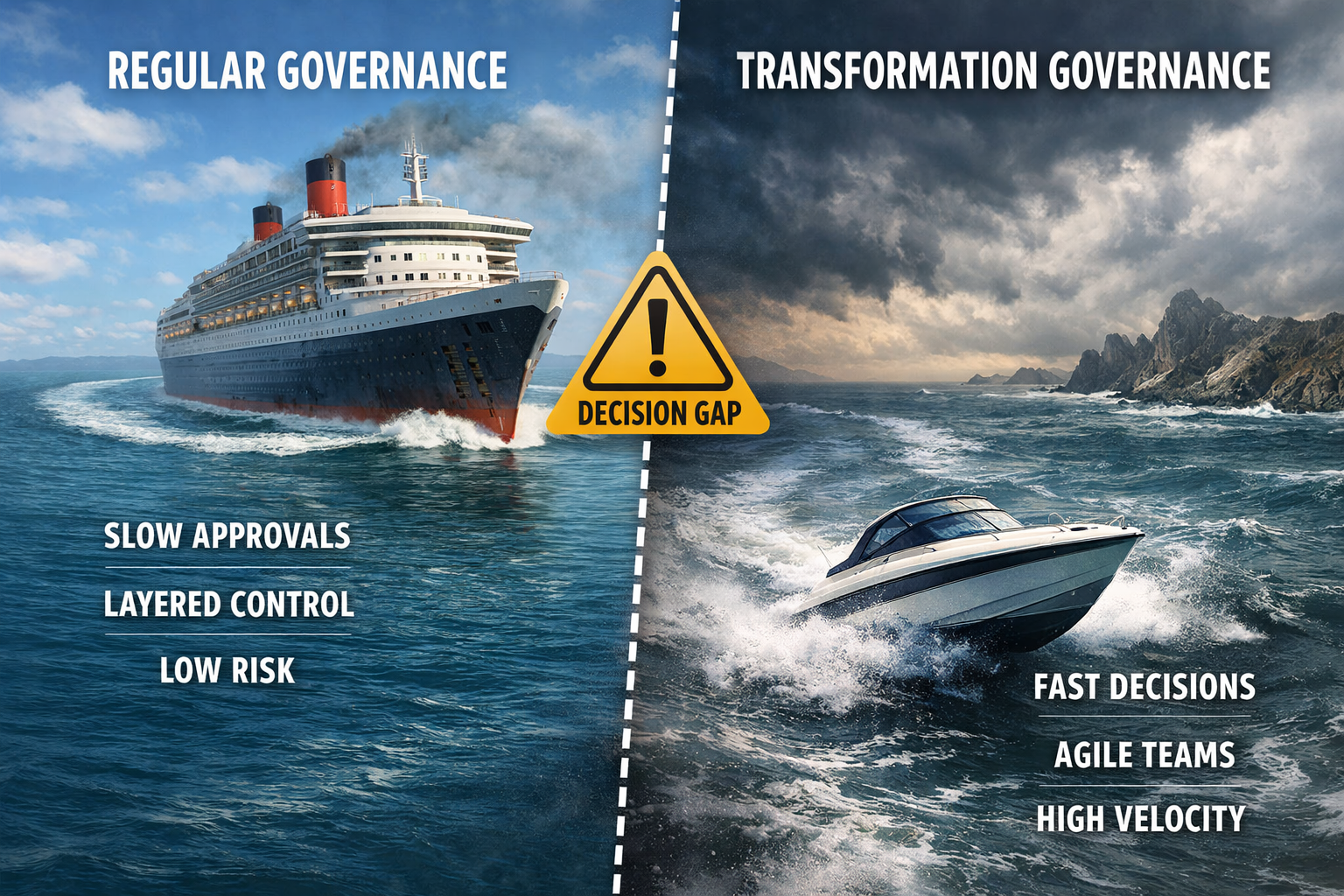
Regular business governance protects the company for good reasons. It reduces risk, protects margin, and keeps operations stable. But transformation decisions do not behave like normal operational decisions. They are more cross-functional, more time-sensitive, and more likely to create rework when delayed. This is the ocean liner problem: the governance model that is right for… Read More
Written by
-
Decision Velocity Is the Missing Operating System
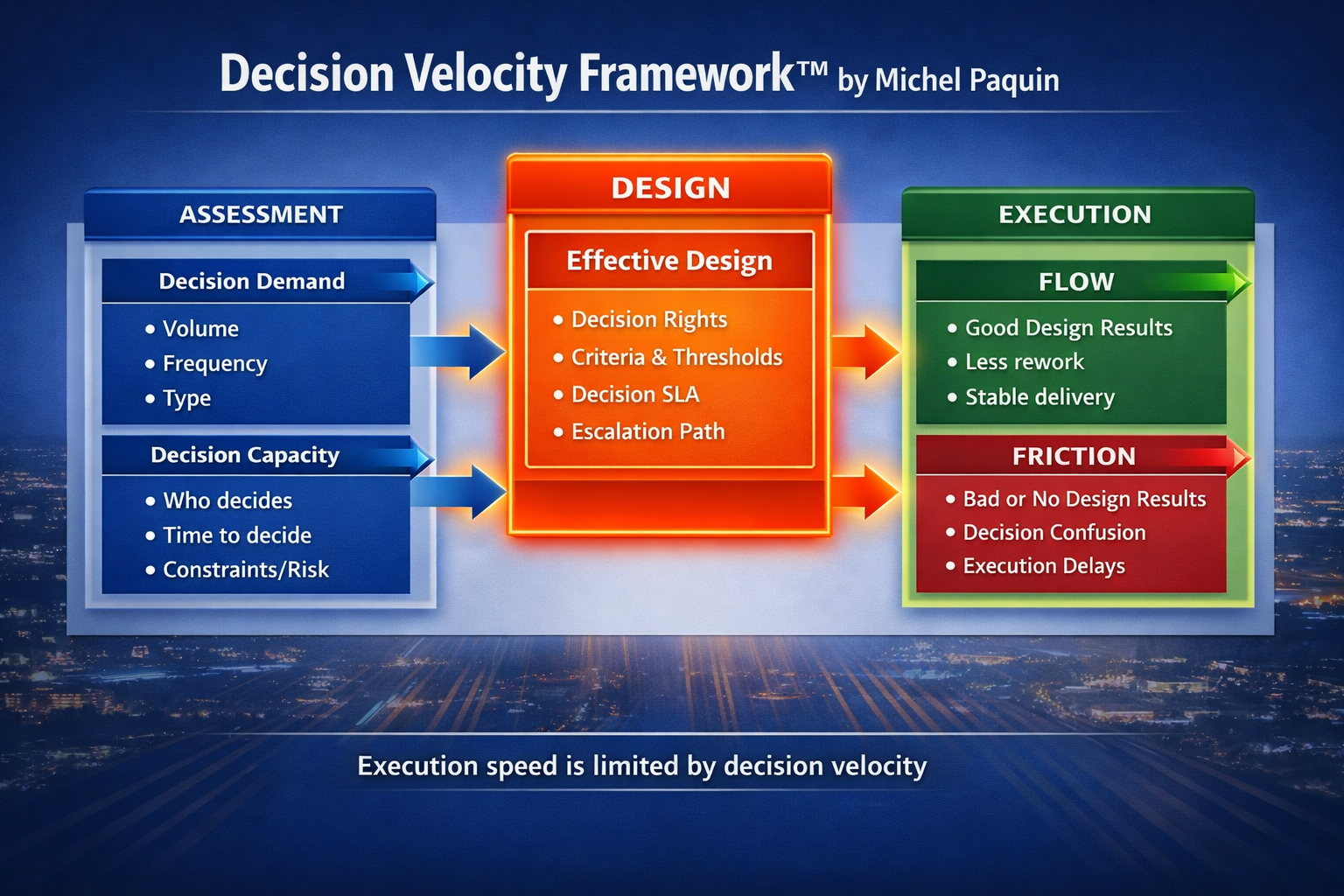
Execution speed is limited by decision velocity. In most transformations, agencies can execute faster than clients can decide. The result: delays, rework, and rising costs. The Decision Velocity Framework shows how to align decision demand, capacity, and design to restore flow and stabilize delivery. Read More
Written by