
Tag: steering committee
-
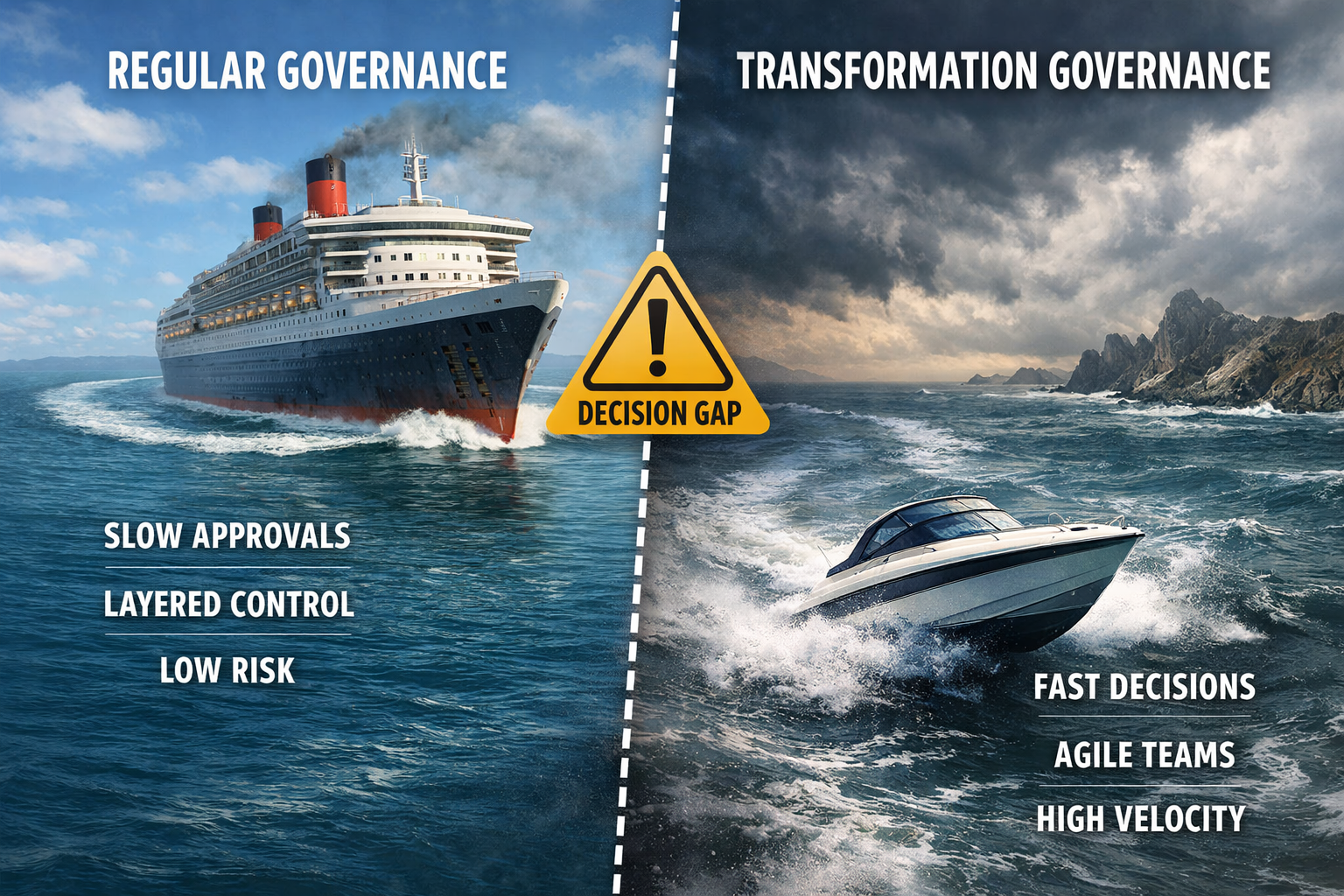
The Ocean Liner Problem in Transformation Governance
Regular business governance protects the company for good reasons. It reduces risk, protects margin, and keeps operations stable. But transformation decisions do not behave like normal operational decisions. They are more cross-functional, more time-sensitive, and more likely to create rework when delayed. This is the ocean liner problem: the governance model that is right for… Read More
Written by
-
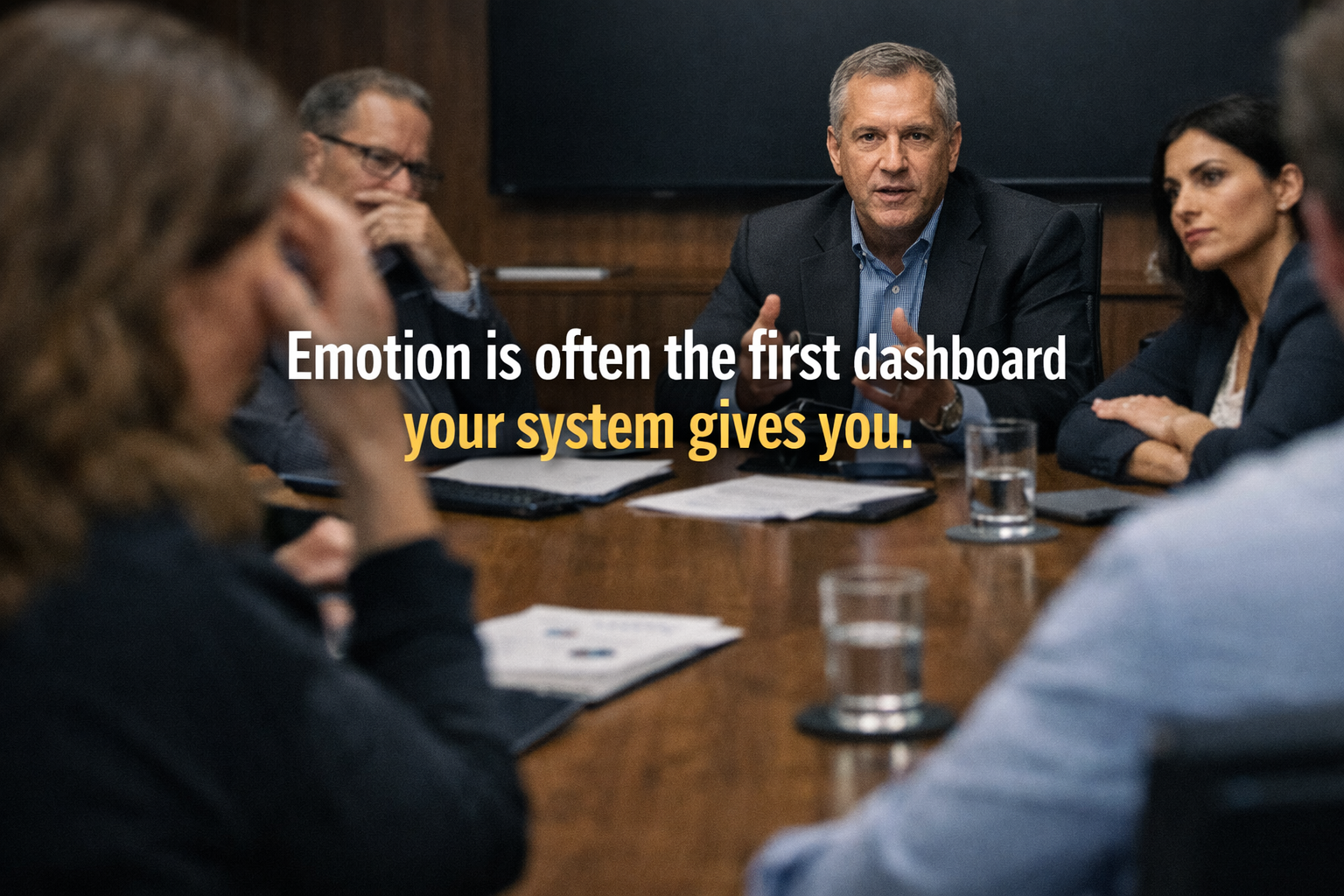
Emotions as Signal, Not Noise
Leaders often treat frustration, defensiveness, and avoidance as noise to calm down or coach away. That is a mistake. In transformation work, repeated emotional patterns are often operational signals. Frustration usually points to blocked flow, rework, or impossible trade-offs. Defensiveness often reveals exposed accountability, hidden vetoes, or unsafe truth-telling. Avoidance usually shows up where ownership… Read More
Written by
-
“We Should Have Known Before”: The Fear Behind Late Decision Escalations
Late escalations rarely happen because people didn’t know earlier. More often, teams hesitate to escalate because escalation feels risky: it can signal failure, loss of control, or political exposure. So issues stay too low in the organization longer than they should. By the time they reach leadership, someone inevitably says, “We should have known before.”… Read More
Written by

-
Veto power without criteria is how slippage is born
The work didn’t slip because the program was complex. It slipped because someone could say “no” without saying why. That’s the silent veto: informal influence overriding formal governance, off-line, without criteria, without accountability, and without a path to resolution. It feels safer than disagreeing in the room. It also manufactures rework. Teams build, then hit… Read More
Written by

-
Fear vs Power vs Ambiguity: how to diagnose what’s really happening in your steering committee
When decisions stall, the root cause is usually one of three forces: fear of risk, power over control, or pure ambiguity about what is being approved. Fear shows up as endless diligence. Power shows up as quiet vetoes and re-opened decisions. Ambiguity shows up as debates about definitions instead of tradeoffs. If you misdiagnose the… Read More
Written by

-
Decision Escalation: Fear is a big driver, but not the only one
Decision escalation is rarely about complexity. It is about safety. When the personal cost of being wrong feels higher than the organizational value of being fast, decisions climb the org chart. Teams call it alignment. In reality, it is risk redistribution. Fear explains a lot of escalation. But it is not the only driver. Power,… Read More
Written by